When is Institutional Capital Right for a New VC Firm? And Two Myths About The Downsides of Taking LP Money.

“My first three ventures funds were all high net worth individuals and founders/tech folks. How should I decide if institutional LPs are right for my next fund?”

This was a question put to me earlier this week from someone I’d met via Screendoor, the fund of funds we cofounded to back new firms (sometimes called ’emerging managers’ in the industry). Of note, and to the credit of this investor, it wasn’t the typical ‘what do I need to prove/show to raise from LPs’ but rather, is this class of financial partner right for me or not?

Before answering I reformatted it to “Even if I could raise the amount of capital for the next fund from my current individual investors, or write the check myself, what conditions or benefits would cause me to consider institutional LPs of any sort [FOs, FoFs, endowments, and so on]?”

Three Reasons to ‘Transition’ to Institutional LPs

A. You Are Building a Firm, Not Just Raising a Fund (AND Know You Want to Raise at Least 2-3 More Funds After this One)

Institutional LPs are most likely signing up for longer relationships with you than any one individual LP and are able to scale with potential increases in fund size. Once you are confident – in trajectory, in strategy, in joy – that venture will be your career ongoing, it’s worth it to consolidate your capital base in this manner.

B. You Want to Take on Performance Risk Instead of Fundraising Risk

Related to the above, the tradeoff in having partners who are there to support you ongoing so long as you do your job is, well, you have to do your job. HNWs, individuals, CVCs, other VCs, etc all might invest in your fund for reasons besides absolute returns; institutional LPs shouldn’t (although even some of them have adjacent motivations such as secondary/direct investment access). Basically if you are the type of person who ultimately wants to be judged by results (and live with standard VC fund LPAs), then being in business with professional institutional LPs – especially those with evergreen pools of capital – essentially takes your fundraising risk down to zero.

C. You Are Willing to Spend the Time to Find Neutral to Positive LPs, Including Passing Up on LPs Who Aren’t a Good Fit for You

Like any group, ‘Institutional LPs’ aren’t homogenous. Based upon their institutional needs, their organizational culture, their familiarity with venture, their personalities and team construction, etc you will find folks who are more or less suited to how you want to run your business. Even in our first Homebrew fund, we focused very much on ‘mutual fit’ and turned down some opportunities to work with LPs where it didn’t feel right.

And Two Reasons to Avoid Institutional LPs That I Think Are Overblown

A. If You Take Institutional Capital They Become Your Customer and Managing Them is a Ton of Headaches

I find this to be a sign of poor LP selection by the GP or inability to run their business well. There’s nothing about the relationship with high quality, evergreen, professional, VC-savvy LPs that adds overhead disproportionate to the value they can bring (sole caveat would be it is kind of annoying when the people in the seats at an LP change – and they do change more than you would expect). LPs are our partners, founders are our customers. That’s always been clear to us and our LPs.

Most of the other overhead questions come into play when you take outside capital versus your own, not who that capital is from. Fund structures have their own encumbrances.

B. Taking on Institutional LPs Reduces Your Flexibility as an Investor

This is the old “they are going to hold me accountable to what I put in the slide deck/portfolio model” complaint. In my experience the only true constraint is what’s in our LPA around vice clauses, etc and even those just require approval (for example, in our historic LP-backed funds we couldn’t invest in cannabis businesses that touch the plants themselves since it’s not Federally legal). These were all nothing burgers for us – our LPAC has given great feedback/approved everything we’ve asked about.

When an LP backs you they are doing so because of a strategy you presented within a specific asset class they want exposure to. I can imagine that if you deviated from that wholesale without communication it would lead to mistrust. But the idea that you have to march down a specific path because of a four year old spreadsheet just isn’t true. Our LPs have always said that what they’re outsourcing to us is judgment – we should focus on being great investors and they expect us to adjust to the market, take appropriate risks, earn the opportunity (with founders, co-investors) to find some ‘off model’ investments. If you followed your strategy 100% you were probably too rigid. If you followed your strategy 0% then you didn’t have a strategy.

If you are raising and want to investigate bringing on institutional partners -> Screendoor!

It might not be true, but it is real. AI, SF and our culture.

“It might not be true, but it is real.” This was the recent advice given to us at Curriculum Night by the Head of Upper School (Grades 5-8) where my daughter is a student. Loosely translated – as it relates to the parenting of teenage girls: whatever feelings they’re manifesting; whatever they believe in happening to them; whatever the probabilities they are assigning to outcomes of these situations — they might not always be logical or likely but they are 100% authentic. So if your attempt to ‘help’ them is just to bypass their emotions and go straight to logic, while unintentionally refuting their lived experience, well, that’s not going to work.

Seems like this holds true for not just my daughter’s age range but perhaps all humans? Or at least that’s what I was pondering when reading Jasmine Sun’s latest essay “🌻 are you high-agency or an NPC?

It is easy to think from the outside that San Francisco is the one place on earth insulated from crisis. Everyone else is living in fear of political upheaval and mass job loss, while the rich nerds discovered suit jackets and now they’re the ones on top. “My mutuals run the world,” goes one Twitter refrain.

For the tech industry as a whole, this may be true. But for most individual participants, the swagger is a gilded surface, paper-thin.

She goes on to cover the zeitgeist of the SF AI scene in a way that reminded me of the opening quote about reality and truth. What she’s describing is definitely real, but is it also true? In the question of, are the people described accurately understanding the environment around them or is it more of a feeling distorted by the echo chamber, status maximizing, and safety seeking? And is it true for enough of our community or just a narrow (but influential) segment of AI maximalist, highly online, 18-32 year old SF folks?

Increasingly talking about ‘tech’ in general conjures the Blind Men and the Elephant parable – the animal you think you’re describing is very different depending on which part of the beast you grabbed.

Jasmine, who is a wonderful writer, closes with her own metaphoric comp, a recent sauna visit

Back in the sauna, the temperature is climbing. We hold our heads in our hands, trying not to overheat. There’s a stinging on my collar and I realize I forgot to remove my necklace. A first-timer burns the soles of his feet. Finally, I’ve had enough. We file out, and plunge into cold water.

Tech Reporter Alex Konrad on Going Independent with Upstarts, What Drives Subscribers (vs Just Views) and How He Uses AI in His Content Creation

Got to know Alex while he was at Forbes, a tenure which basically made him one of, if not *the*, go-to reporters for exclusives launches and fund announcements. As a result of our friendship, I knew that Alex was considering going indie at some point and excitedly subscribed to Upstarts when he launched. Let’s learn a little more about Alex with Five Questions.

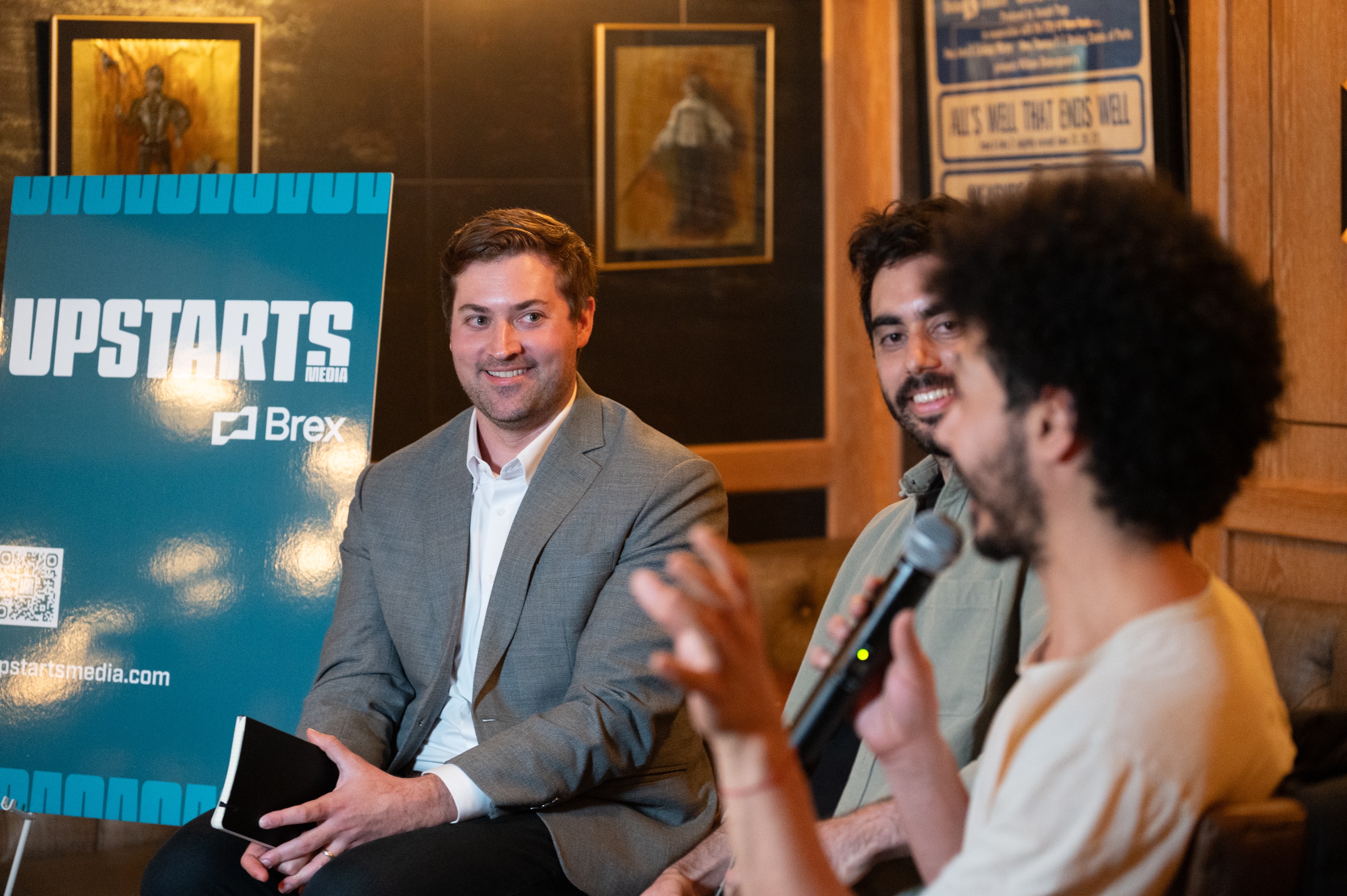
Zach D. Roberts Photography

Hunter Walk: Upstarts Media is hitting its ~six month anniversary. I know it’s a cliche question, but what’s one thing about DIY’ing that’s surprised you and one thing that’s been sorta as expected?

Alex Konrad: I’ve been reflecting on this question as we approach 6 months (September 25th!) and recently passed 50 newsletter editions. I feel like my answer changes day by day. But if I had to pick one surprising thing, it would be how true the meme “you can just do things” has proven for Upstarts.

We’ve taken our lumps with missteps and small crises like anyone starting a new venture, let alone a solo, self-funded one. But we’ve also been able to work with awesome partners straight out of the gate, such as Brex, Mercury, Notion and Vanta, and host valuable, high-energy events for the startup community. Six weeks into the business, 700 founders applied to join a lunch-and-learn on early-stage fundraising we put on as part of NY Tech Week. We’re running back a version of that event in San Francisco for SF Tech Week, and already have hundreds of applications to join. If you bring the energy and hustle, people will show up.

At the same time, I braced myself for a constant juggling act that makes it difficult to find time to focus, and that’s proven annoyingly true. As a team of just one full-time employee so far (me), Upstarts requires wearing a lot of different hats. I used to be able to spend weeks chasing one high-potential magazine feature profile or investigation. Now, I’m also wearing a growth hat, a sales hat, a biz dev hat, and a social media one, every day.

Last month, I was lucky to interview the tech legend Jack Dangermond, the billionaire founder of Esri, and ask his advice for startup founders. It didn’t make it into the story, but one piece of advice he shared has stuck with me since: “You personally make 10 or 20 decisions every day. And those little decisions turn out to be more important than the big ones.”

HW: Some of your industry peers who previously worked for established brands (like you did at Forbes), noted that actually becoming a startup themselves gave them experiential insight into the world they cover, sometimes in ways that created new empathy for the ‘founder’s journey’ so to speak. Has how you covered startups changed as a result of your own experiences with Upstarts?

AK: At one of the first conferences I attended after launching Upstarts, a founder in an onstage panel admitted that they felt guilty to be there, instead of working on their business. I empathize with that sentiment so deeply now. Every meeting, every article, and every trip I take for Upstarts comes at a direct opportunity cost that I never felt as an employee somewhere else. I now appreciate just how much emotional weight a startup founder or small business owner carries at all times. It fuels my drive to tell the stories of underdogs going up against the incumbent businesses, because I feel like one.

One caveat: I can’t speak for every reporter, but the tech vs. media narrative is usually wildly, and cynically, overblown. My wife Natalie Sportelli is an early-stage consumer investor (send her deals!) and I have friends and former classmates who are founders and builders across the startup ecosystem. I’m regularly in touch with some of the folks who are the most vocal about the media’s shortcomings. And I don’t think I’m unusual in that regard. I’m not sure you need to have built a startup to cover them with fairness and respect. But it helps!

HW: Oliver Darcy, who covers the media industry independently now via Status, noted in his one year anniversary retrospective that (a) free content doesn’t drive revenue and (b) scoops move the needle. Forbes was already behind a soft paywall so you were familiar with the incentive model of subscription journalism, but now that you call 100% of the shots, how do you decide what to write about?

AK: When I’m interviewing startup founders, it’s fascinating to hear how much (or little) they paid attention to target customer feedback early on. Sometimes they iterated privately for years; other times, they know what their customer doesn’t know. (We just wrote about one company like that, Console, whose CEO said IT professionals would have never asked for AI agents versus more technical tools.) 

Six months in, I’m still feeling out what Upstarts readers want versus what they say they want. Scoops (such as this one about a team that left OpenAI, or this one on Meta meeting with Midjourney) drive subscriptions, especially paid ones, but it’s a dangerous game to chase those inconsistent highs. Deep dives (like this one on AI researcher salaries) and trend stories (this one, on Loyal and pet tech) delight existing subscribers, but don’t drive as many new top of funnel subs.

Right now, we’re trying to mix it up between launches and exclusives in our free edition, and meatier stories and interviews in our paid one. The through line: every Upstarts story should be trustworthy and fun. In a bonkers, fragmented news cycle, it can sometimes feel like each story is pushing a rock uphill to be seen. But if each issue is tactically or strategically useful, we’re hopeful that we will continue to find our audience and ‘content-market-fit’.

HW: Fill in the blank, ‘if I’d not become a journalist I might have been a _____’]

AK: Archaeologist! In college, I created my own ‘Indiana Jones’ coursework, full of medieval and Middle Eastern history classes, archaeology courses and excavations, Latin and Arabic. Then I found out how much time archaeologists spend fundraising and campaigning for permits, or back conducting analysis in a lab! 

It was that or the Foreign Service for me, but I gravitated toward storytelling – and the fast pace of stories and new ideas on the startups side of tech – pretty quick. If I secretly won the lottery, I’d probably combine all of these interests in an economically impractical way, writing historical fiction and sci-fi books.

HW: How do you use AI in your work for Upstarts? What’s your personal tech stack in general – any apps you especially love? 

AK: Our very first Upstarts profile was on AI note-taking app Granola back in April, and I remain a daily user to record and summarize meetings and interviews. I’m excited to try out their new phone call transcription tool, but in the meantime, I use Otter.ai for searching call transcripts. Occasionally, I consult ChatGPT and Perplexity for research questions (I semi-trust, always verify). 

Recently, we launched a YouTube channel with a wide-ranging video interview I conducted with Klarna CEO Sebastian Siemiatkowski at NYSE during their IPO week. NYSE helped out with cameras, but I ended up with three 20 GB raw files and no clue what to do with them. Thankfully, Descript has a deeply impressive AI copilot; about 10 hours of trouble-shooting and prompt engineering later, I vibe-edited my way to a finished product that looks pretty slick.
Right now, my work is too unpredictable to feel confident about automating it with other AI tools. But smart people like Every CEO Dan Shipper keep saying I could be scaling faster with agentic employees; maybe I’ll figure that out soon. If any AI agents are reading this, I’m hiring.

Thanks Alex! Support great tech journalism by subscribing to Upstarts!

S**t Shoveling

I used to think that if you never had to shovel shit, you ended up lacking empathy for those who shovel shit.

My POV has been updated: it’s worse than that.

If you’ve never had to shovel shit, not only do you lack empathy for those who do, but you also tend to *create* more shit for others to shovel.

It helps to have shoveled shit at some point in your life. And maybe it’s never too late to pick up a shovel.

AI Buying Software Instead of Salespeople; Teaching Companies To Do Less; Have the Swiss Figured Out Cheaper Housing? and +++ [link blog]

Labor Day weekend reads

Testing AI’s GeoGuesser Genius [Scott Alexander/Astral Codex Ten] – A detailed walkthrough of how good general purpose AI [as of May 2025] is at guessing locations based off a single photo (stripped of geo metadata of course). It’s fun to try and understand how the models reason the answers here.

When Software Buys Software [Jeff Morris Jr/New Internet] – Early examples of what happens when AI models start to recommend certain software infrastructure products in response to general questions, and even more so, what happens when they make their own ‘purchase’ decisions agentically.

“Software won’t be sold over drinks. It’ll be selected, evaluated, and integrated by agents.”

One of the reasons everyone is trying to figure what SEO looks like in AI-world (coined AEO for now, done by companies like ScrunchAI, one of our recent investments).

A ‘Third Way’ Between Buying or Renting? Swiss Co-ops Say They’ve Found It [Thomas Fuller/New York Times] – I’ll just egregiously copy/paste to explain this one

In Switzerland’s member-based cooperative housing, new residents buy shares to gain admission to the building and get one vote in the corporation regardless of how many shares they own. The co-op uses the money to maintain the building, keep rents below market rate and, often, provide communal amenities like child care.

When a resident moves out, their shares are returned at face value. There is no capital gain.

Addition vs Subtraction [Molly Graham/Lessons] – Positing that organizations are inclined to always add more to their plates than subtract. And why that’s a problem. Five tools from Molly to try and get better at subtracting.

Enjoy!
Bluesky has the JUICE -> https://bsky.app/profile/hunterwalk.com

When Slack Went Down All The Time; AI is Learning to Lie in Order to Win; Your Org Chart is About Power Centers; and +++ [link blog]

Stuff for you to read!

The reliability crisis [BuildingSlack/Johnny Rogers] – “If we can’t ship safely, we aren’t shipping at all.” That’s what Slack’s OG CTO told the company in 2018 when the product started to be plagued by reliability challenges. Company histories tend to be hagiographies or written by the most political of the team, looking to enshrine their own role in the success. BuildingSlack is a fun newsletter that sporadically fires off stories about the startup, written by former employees. This particular edition feels familiar to anyone who has ever gone through hypergrowth company phases.

A Fungible Worldview, Why Cluely Is The Dark Spirit of Venture Capital, Whether You Like It Or Not [Kyle Harrison/Investing101] – Typically I’m skeptical when an investor criticizes a startup – focus on your own house so to speak, unless there’s egregious behavior to be called out. But here Kyle uses Cluely – and his distaste for their stunt marketing – not so much to harp on them. Instead he shifts most of his focus back to the world he lives in – venture capital – and why Cluely is a chicken (or egg) example of Venture Capital 2025. And I think ultimately his post shares more about *him* than it does attempt to take down anyone else. So that I applaud. Plus I enjoy Kyle.

What Happens When AI Schemes Against US [Garrison Lovely/Bloomberg] – I live in the future. How else would I, in 2016, be able to write this post about commerce soon being agents trying to convince us to buy stuff, and eventually our own agents arguing back? Self-congratulations aside, I love the analysis here about current LLMs optimizing for a task (or ‘winning’) in a way that ends up potentially causing harm. I mean, this is basically the ‘what if AI decides the best way to ensure peace is to kill all humans’ question but not increasingly with real data. And hopefully lower stakes.

Trio of Molly Graham Essays from her Newsletter

Startup org design: Design power centers intentionally – So good. Instructions on how to think about your org chart as power centers and not just resource management. As Molly says, “One of the most powerful things you can do to accelerate your company’s growth and reduce wasted energy is to design your org carefully including where you want the power to sit.”

Layoff lessons: Four things I wish I knew – Just read it.

Part 3: Compensation for Startups: Implementing and “Defending” Your Compensation System – Where Molly makes the case that ‘simplicity’ is a key factor of comp system quality and sustainability. “When you’re designing and implementing this system, you have to realize that a lot of the day-to-day will be implemented by recruiters and managers through hiring and through conversations with employees. That means that simple is your friend. As you’re designing, you want to think about the most junior recruiter on your team and ask, “With a little training, can that recruiter maintain this system?” The more complicated you make it, the more likely that the answer is no.”

Enjoy the waning days of August…
Bluesky has the JUICE -> https://bsky.app/profile/hunterwalk.com

Why Marketing Sucks Right Now, Underground Robot Fights, Free Waffles Worth $50, and +++ [link blog]

Summer is for reading.

Every marketing channel sucks right now [Andrew Chen/a16z] – A guy who made his career in growth marketing surmises that, yeah, it’s not just you, it’s everyone

Unfortunately this is the state of growth marketing. A lot of channels are not working, or are slow, expensive, or one-time only. This is the natural end state for things, and maybe we’re in a bit of a lull due to the technology super cycle as we’re 15+ years into the mobile wave, we’ve had various kinds of paid ads for 20+ years, and so on.

Andrew does provide advice though on how to navigate this stage but be forewarned, in his eyes a great product is necessary but not sufficient.

What was Quartz [Zach Seward/fmr Quartz CEO/owner] and Fell in a hole, got out [Tony Stubblebine/CEO Medium] – Pairing these because they’re both pretty honest looks at content businesses, the former a media company of some sort, the latter a publishing company of some sort. I append ‘of some sort’ not to degrade or minimize, but because the struggles and journeys they describe involved straying from, examining, and trying to return to, the mission and structure which made sense for the company. Quartz is largely a story told, while Medium is a story ongoing.

The most San Francisco sport ever? Underground robot boxing enters the arena [Zara Stone/The San Francisco Standard] – Please don’t turn this into a startup, a sponsored recruiting event, or #content. Against the backdrop of AI boom, our national government, and polarization generally, it’s fun to have something that’s just Keep San Francisco Weird.

Why Hampton Inn is the Hotel Brand to Beat [Patricia Clark/Businessweek] – Free breakfast is all it takes.

It costs a US Hampton franchisee less than $5 per occupied room to furnish this cornucopia, but to a family of four, the perceived value is closer to $50, or roughly one-third of the average cost of a nightly stay. That math has helped power Hampton Inn’s unlikely rise to become the world’s largest lodging brand, with almost 350,000 rooms spread across 43 countries.

Obviously that’s not the entirety of the strategy – and you should read the whole piece – but I love the 10x ROI on waffles anecdote.

Have a great August weekend!
Bluesky has the JUICE -> https://bsky.app/profile/hunterwalk.com

No Notes: Near Perfect Posts on AI Ruining the Public Web, Silicon Valley Etiquette, the Fear of a Second Success, and +++ [Link Blog]

No Notes. Just some chef’s kiss, on-target reads

Encore Anxiety [Anu Atluru/Working Theorys] – Wonderful read on the pressure to succeed a second time. Oh please, some might concern troll, but I’ve witnessed this in tech careers. Most frequently with (a) repeat founders who fear their next company will fail and prove their initial win was a lucky fluke, and (b) younger folks who ending up joining an early stage rocketship out of school and once it succeeds beyond their expectations, worrying they’ll never find another. As Anu writes,

Impostor syndrome gets all the attention, but encore anxiety is its cruel foil: not the fear that you’re a fraud, but the fear that you’re genuine and still might not be able to prove it. The difference in attribution matters to the dominant psychology at play: the impostor fears their past success was luck; the encore-anxious person believes it was skill and yet fears they can’t summon it again at will.

Either way, there’s a focus on what others are thinking.

Ultraviolet Catastrophe: AI is about to make the public internet useless [Philip Rosedale/Philip’s Newsletter] – You might assume this post is about business model incentives pushing quality content behind paywalls or disincentivizing its creation all-together, but it’s actually about trust and malignant AI content (fraud, slop, etc). Philip believes the volume will be so significant that we’ll need to rethink the architecture of the web itself. His summary paragraph:

AI is about the flood the internet with messages and render it useless for many tasks. To scale to billions in a world filled with AI agents capable of typing 1000 times faster that us means a complete overhaul of our aging internet architecture. We will have to turn off anonymous public services, replacing addresses with channels – or in the language of graphs – replacing nodes with edges. There will be turbulence during this process, so fasten your seat belt and find some good books to read during the down-time.

Silicon Valley Etiquette [Angelo/Parallel Lines] – This was a really interesting sociological view of SV etiquette and the history of these norms. I hope we’re able to continue keeping the best aspects of our community, while reexamining how we also unintentionally (and intentionally) create barriers.

The Editorial Battles That Made The New Yorker [Jill Lepore/The New Yorker] – Skip this if you’re not a writing/creative process egghead like me. But for those who are, this is a great tour through the New Yorker’s editorial philosophy history and how it conflicted with (or helped) the writers they contracted for articles.

Inside Home Depot’s $20 Billion Secret Garden [Ben Cohen/Wall Street Journal] – Home Depot doesn’t just stock flowers and plants, it very much works hand-in-hand with growers, shaping what gets grown, what genetic attributes to optimize, and ultimately, what gets brought to market.

To find those plants, Home Depot runs 25 trial gardens in nine climate zones across the U.S. and studies them in the field under a variety of conditions. After all, a plant that thrives in New Mexico might not survive in New Jersey. For security purposes, some of those experimental gardens are hidden in cornfields or through backyard donkey corrals, protected on secret farms before the plants are selected and patented.

A Note on the State of Applicant Fraud [Matt Hoffman/M13] – Recruiting is changing dramatically because of AI – the LLMs now polish resumes, generate perfect responses, and in some cases, even create the candidates themselves. Some early data and how actually AI might also be the solution from Matt Hoffman, VC firm M13’s talent partner.

$CHYM TIME: The Three Boxes Chime’s IPO Checked for Me

Whoa, it’s been a minute. Somehow went almost two months without a post. Bad blogger!

Yesterday Satya and I had the chance to celebrate Chime going public on NASDAQ. There are many ways to ‘grade’ an IPO from a punditry perspective (here’s my own framework which I think still holds), so I’m not going chime in with my own speculation (see what i did there), but on the other side of it, did want to recognize why this one felt special. It was our fourth IPO as a firm (defined in the loosest terms as Homebrew holding pre-IPO stock in a company), but the first which checked off all three of the boxes of consequence.

  1. Financial Outcome for the Team: Founders and VCs know how to make money over the course of a journey like this, but what makes me giddy is seeing so many people on the Chime team win too. Being part of a special startup pays off in terms of career trajectory, learnings, and network, but also seeing your equity convert can change your life. I’m sure $CHYM minted many paper millionaires, but regardless of amounts, getting some dollars into the bank account allows these folks to continue taking career risk, which is positive for the ecosystem.
  2. We Were There Since the Beginning: DPI without stories is boring. Stories without DPI is fatal. Chime provides us both DPI -and- Stories. The best combo! Special credit to my partner Satya who sat on their Board for many years, interviewed most of the early hires on behalf of the founders, and generally did more work than me 🙂
  3. Founders are Still Running the Company: To have Chris Britt become the CEO of a NASDAQ company is a credit to him, and a role model for our industry. Chris came from a working class community in the New York City suburbs and brings that mentality, that respect, and that ethic to every day on the job. I’m romantic (and old) enough to believe going public means something.

Onward. Not the end of our relationship with Chris, Ryan, and Chime. Just the beginning of a next phase.

Dec 2024 drinks with Chris and Ryan, toasting what was planned for 2025…..