Some Stories Need to be Founder To Founder

Huge_old_book_with_clasps_by_barefootliam_stock

When I write here, it’s usually because I *think* I’ve figured something out worth sharing or community feedback is valuable in helping me examine a new topic. The posts can come suddenly or tumble around in my head for months. Yet there are two that I’ve really struggled to sit down and write (I don’t do drafts or ask people for feedback).

Why has it been so difficult? Because I think while the advice I want to deliver to founders is generally “correct,” it’s not really useful coming from me. Because when these words come from VCs (instead of other founders), they get accused of talking their book or otherwise being self-serving. See the 2016 chatter that VC concerns about funding environment is so we “can get better prices on deals.”

So what are the discussions where Founder to Founder may be more meaningful than another VC blog post? Two are especially top of mind for me:

How too much money, too early, at too high a valuation, can actually be a BAD THING, not a GOOD THING (especially when it’s from the wrong investors for your company or stage).

Why you should be careful about leaning on VC Operations teams for too much support, especially during your formative years.

If folks want to highlight any good founder posts/tweets/podcasts/etc that discuss these two issues, I’d be happy to surface them here.

The Best Startups Resist Snacks (& I’m Not Talking About Food)

Prioritization_Inline_2

Intercom’s Head of Growth recently wrote a blog post based on a conversation we had about prioritization within startups. It’s about evaluating roadmaps by a 2×2 of Impact and Effort. I’m glad they found it useful and full post is here.

“It’s the low-effort, low-impact work that can kill you, because it’s so attractive. Hunter refers to it as “snacking”. It feels rewarding and can solve a short term problem, but if you never eat anything of substance you’ll suffer.”

A Busy 60 days at Homebrew

It’s been an exciting past 60 days or so at Homebrew, our seed fund.

  • ManagedByQ raised their B Round [link]
  • Even raised their A round [link]
  • RadioPublic raised their seed round [link]
  • Chime raised more money for growth [link]
  • TheSkimm raised their B round [link]
  • Primary raised their A round [link]
  • Winnie raised their pre-seed round [link]

Satya and I feel so fortunate to be working with this great group of founders and their teams.

“Why give up that much equity for an amount we could raise other ways?:” SMB Tech Talk from ArtJamz

This week I’ll be running a series of Five Question interviews with small businesses which were facilitated by BondStreet, a SMB lending platform (we’re investors). LocalBiz stories are really fun for me since my first high school job was working in an independent bookstore. These people are true founders and entrepreneurs just like any venture backed company.

Hunter Walk: Can you share the founding story of ArtJamz? How did it all begin?

Michael Clements: The ah-ah moment came when I was up late one night painting, drinking and hanging out with a group of friends at my house instead of going out and thought, “Wouldn’t this be great if there was a place we could go to do this?” During this same time, I had decided to audit an MBA Entrepreneurship class at my alma mater American University in order to learn more about business plans and starting a business. As media / communications professional my business chops were lacking.

During this time, I was working as executive editor of a well-known city magazine where I was interviewing and getting inspired by local business leaders and I had great grasp on the zeitgeist of the city. I also wanted to find an idea that was within the creative economy as I have a passion for and experience within arts and entertainment. Most importantly, since day one, I’ve told myself no matter what I do it has to “make the world a more creative place.” That’s my overriding principle. All these factors, plus timing, blended together to birth ArtJamz.

HW: All of the social platforms claim to help small businesses and brands amplify their voice, find their customers. Are you active on Twitter, Facebook, Tumblr, Instagram, etc? How do you decide which products to dedicate time and attention? Do “likes” and “shares” turn into sales?

MC: We are activate on all of these. We have a marketing coordinator who helps get our voice heard as well as listens to and communicates with voices talking about and to us. We further leverage mailchimp (eblasts), wordpress (website), hootesuite (social media messaging), review sites such as Yelp! and Trip Advisor and we have a presence on YouTube. SEO is crucial as well. We use a service called Scene Squid to get our classes and events listed on local media event calendars.

Out of all of them, our team likes Instagram the best since ArtJamz is such a visual experience. We coach our team on capturing great moments in the studio and hash-tagging for maximum effect. We boost posts occasionally on Facebook. We’re convinced all amazing images coming from the studio generate customers and impact to bottom line. We also believe in old school marketing — fliers, posters, street teaming and outreach to editors and media gatekeepers. My team keeps bugging me to up our SnapChat game.

HW: At Homebrew we see lots of startups wanting to serve the small/growing business segment with software tools ranging from ecommerce, to point of sale to employees backoffice and so on. What software tools help power your business – besides Microsoft Excel – since everyone secretly just uses Excel 🙂

MC: Oh wow. So many tools. I think the exciting thing about being a small business in today’s world is that so many of the brilliant minds in technology are building tools to help businesses like ours. It’s amazing but can be overwhelming too. I always joke that were a digital wolf in an analog sheep’s clothing. You can’t get any more analog than putting paint and glitter to canvas and getting your hands dirty. But that’s the tip of the iceberg. Everything else is tech.

Aside from the before-mentioned digital marketing tools, we use FareHarbor (online booking and reservations), Square (POS & Gift Cards), When I Work (HR, Staff scheduling), Quick Books Online (accounting), Wells Fargo (Banking and Payroll), DropCam (security), Succuri (website security), Slack (team communication), Google Drive (email hosting and file sharing), HubSpot + SideKick (CRM and Email Analytics), and Drop Box. Everything in our studio runs off iPads. We’ve tried several loyalty programs, but haven’t found anything that really works well. As virtual reality becomes more pervasive we’d love to use it to help people paint more!

HW: What’s a problem you wish a technology startup could solve for you?

MC: How about helping my 2 year-old son sleep more, so I can too! Our holy grail is one solution that allows us to follow our customers seamlessly from booking to in-studio experience to post event follow-up. We blazed our own trial in building ArtJamz. The result is that ArtJamz is a hybrid experience — somewhere between restaurant, paint and sip and gym / yoga studio. So, the right reservation + POS software solutions have been hard to find. To complicate that, we’re building multiple locations, so the system needs to be able to scale across numerous locations, whether franchises or corporate-owned locations.

We need one system that allows customers to choose their favorite ArtJamz studio, book and pay online for an experience, quickly check in and make additional transactions in the studio, and then enables us to follow up with a loyalty program, offers, surveys, etc. It would be great if it handled staff scheduling and offered monthly memberships and tracking of blocks of studio time like a yoga studio. I’ve recently spent more time researching gym / yoga studio solutions.

HW: You partnered with Bond Street for growth capital. How did you originally connect with Bond Street? What’s the biggest difference for you between a platform like Bond Street and traditional borrowing from a bank or other offline source?

MC: I had been researching funding options for about 2 years in order to build-out our 4th location and make it our prototype retail location. We’ve bootstrapped since we launching. This enabled us to open a number of studios and remain profitable, but, we never had enough liquidity to go all in and create our “model location.” In tech terms, our first 3 locations were phase 1, 2 & 3 MVPs. First, we tried investors. But, based on our sales and the amount we we’re looking to raise, $60-$120K, it could have meant giving up over 40% equity. Why give up that much equity for an amount we could raise other ways?

Then we tried traditional lending. We were approved for an SBA loan but after 4 to 5 months of going through the SBA closing process, I had a change of heart, mainly since this meant using my mine and my wife’s house as collateral. As a new dad and husband, the more I thought about that, the more it bothered me. You can’t really beat a 10 year pay-off at 4% but what’s value of going to be knowing that you haven’t mortgaged your house? It meant eating most of our $5,000 deposit but I’m convinced we made the right choice. Sometimes it’s not all about APR. We looked at credit cards and smaller bank loans, but interest rates of 11 to 15% were too high.

Crowdfunding was an option but brought with it a lot of administrative follow-up and complications. So, we looked at newer forms of lending of which there are many now. Bond street stuck out for several reasons. First, they took the time to understand our business; it wasn’t about crunching us into a pre-set formula like banks do. I was also impressed with the ease of applying. They have a solid tech game. The rates were competitive and the payoff period gave us an extra year over most other lenders. Importantly, they weren’t hard sellers. I probably got quotes and information from 4 or 5 other lenders and in most cases that came with a very aggressive boiler room type hard sell. I also have a lot respect for the fellow DC-based entrepreneurs and the founders of Sweetgreen who were part of Bond Street’s Series A.

ArtJamz_1

About Bond Street:

Bond Street is transforming small business lending through technology, data and design.

Whether you’re looking to hire additional employees, open a new space, or purchase new equipment or inventory, Bond Street aims to make financing your business goals simple, transparent, and fair.
To learn more about Bond Street, visit https://bondstreet.com/howitworks

“We reinvest all free cashflows back into the business:” SMB Tech Talk from Blank Label

This week I’ll be running a series of Five Question interviews with small businesses which were facilitated by BondStreet, a SMB lending platform (we’re investors). LocalBiz stories are really fun for me since my first high school job was working in an independent bookstore. These people are true founders and entrepreneurs just like any venture backed company.

Hunter Walk: Can you share the founding story of Blank Label? How did it all begin?

Blank Label: It all started because someone complimented me on what I was wearing at work. The summer previous to starting Blank Label, I was in Shanghai and got some custom suits and shirts made. When I came back into the office, people would start complimenting me on my new clothes. It felt awesome, so much so that I was only wearing my custom clothes. Eventually coworkers would ask where these new suits and shirts were from, and when I told them they were custom and affordable, they asked how they could access this. That’s really where it all started, and over the years we’ve just kept finding men who wanted that original premise, clothes that fit and are comfortable at an affordable price.

HW: All of the social platforms claim to help small businesses and brands amplify their voice, find their customers. Are you active on Twitter, Facebook, Tumblr, Instagram, etc? How do you decide which products to dedicate time and attention? Do “likes” and “shares” turn into sales?

BL: We are intentionally unsocial. We design our business heavily around our target customer, and he just isn’t looking to engage with brands on social. It’s actually been hard to be disciplined not to jump on the social bandwagon over the years as it’s just become so sexy, but each time we think about investing more there, we just look at our customers’ behavior and recognize there are other areas we can invest.

HW: At Homebrew we see lots of startups wanting to serve the small/growing business segment with software tools ranging from ecommerce, to point of sale to employees backoffice and so on. What software tools help power your business – besides Microsoft Excel – since everyone secretly just uses Excel 🙂

BL: We love excel as much as the next person and everyone in the company lives in either Excel or Google Spreadsheets everyday. In terms of our technology stack, we’ve been pretty in-house focused from day one. We’ve built our website, CRM, ERP all internally, which is pretty uncommon for a company our size with one developer. Email is our most powerful marketing channel, and for that we use an ESP called Klaviyo, and SumoMe for on-site email capture. Two other software products of not that we’ve been really happy with are Gusto for payroll, HelpScout for support desk.

HW: What’s a problem you wish a technology startup could solve for you?

BL: From a marketing standpoint, we take more of a brand approach than direct approach. That makes attribution challenging, e.g. a visitor finds a blog post via organic search, then comes back via retargeting ad, and then finally converts on direct traffic. Do we know all those touch points for that visitor, and how do we weight those sources of traffic. There are some enterprise solutions that we’ve seen, but nothing that’s been a right fit for a company our size.

HW: You partnered with Bond Street for growth capital. How did you originally connect with Bond Street? What’s the biggest difference for you between a platform like Bond Street and traditional borrowing from a bank or other offline source?

BL: We heard about Bond Street from a business network called YEC. For a company like ours, we reinvest all free cashflows back into the business, but on a tax return basis (which is what traditional bank lenders look at), it looks like we’re barely profitable. From Bond Street, they’re willing to dig into the numbers a bit more and see that we are reinvesting back, and are growing at a good clip that we can comfortably cover the debt. It was also a frictionless process where we uploaded docs we already had and very quickly got a loan offer.

BlankLabel_2

About Bond Street:

Bond Street is transforming small business lending through technology, data and design.

Whether you’re looking to hire additional employees, open a new space, or purchase new equipment or inventory, Bond Street aims to make financing your business goals simple, transparent, and fair.
To learn more about Bond Street, visit https://bondstreet.com/howitworks

“I don’t ever plan on retiring:” SMB Tech Talk from Tone Academy

ToneAvademy_2

This week I’ll be running a series of Five Question interviews with small businesses which were facilitated by BondStreet, a SMB lending platform (we’re investors). LocalBiz stories are really fun for me since my first high school job was working in an independent bookstore. These people are true founders and entrepreneurs just like any venture backed company.

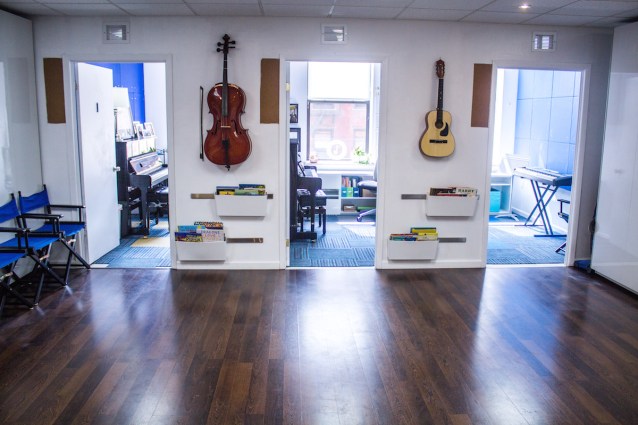
Hunter Walk: Can you share the founding story of Tone Academy of Music. How did it all begin?

Jenny Shaw: The question on how something begins is a bit slippery – especially when it comes to education and the field of teaching.  Technically, I opened Tone in June of 2011.  However, the dream has always been to have my own school – even back when I started playing in Suzuki at 2 years old. My journey through music with my mom was a source of strength and cooperation that I wanted to extend to other families and although I had a performing career throughout my college and 20’s, teaching was always my passion and my calling.  After teaching in NYC at SO many different schools, I realized that in 2011 I had enough of a reputation and following that it would make more sense to start a community of parents and teachers who could share in my vision.  We started with 40 kids and 3 teachers and now we have over 300 students and 25 teachers. I don’t ever plan on retiring from this community!

HW: All of the social platforms claim to help small businesses and brands amplify their voice, find their customers. Are you active on Twitter, Facebook, Tumblr, Instagram, etc? How do you decide which products to dedicate time and attention? Do “likes” and “shares” turn into sales?

JS: Yes, we have an online presence that we actively (to different levels) participate in using a variety of platforms.  Like many businesses, it’s hard to translate “likes” to sales, but especially so in our business which is so very personal and also has to do with childhood education.  There is NOTHING more important than a direct referral from an existing client.  I’m dubious about how much “personal referrals” happen in social media, but it could quite possibly start the conversation on the playground.  When I look at our metrics (to the extent we can gather information) our #1 point of contact is still face to face referrals and our #2 is our sidewalk sign.  That floors and frustrates me to think that a very basic sign can drive traffic more than the thousands we spend on online marketing, but I think because we’re in NYC, location is also a huge factor for parents.  I can’t discount the fact that all of the tangled web of online algorithms are calculated by having a well-rounded online and social media identity…  By that I mean Instagram may not bring a client in, but having that link may up our Google rating which in turn may bring someone in.

HW: At Homebrew we see lots of startups wanting to serve the small/growing business segment with software tools ranging from ecommerce, to point of sale to employees backoffice and so on. What software tools help power your business – besides Microsoft Excel – since everyone secretly just uses Excel 🙂

JS: This question automatically raises my anxiety level.  I feel when I’m asked this question, what I’m telling myself is “You are not using enough programs!  You should be investigating this more!”  However, in the past when I’ve tried to utilize a new program – scheduling software for example – I’ve sunk so much time and cost into training and populating our data only to find out that it really doesn’t work for us or is buggy and more of a hassle!  I am pulled in so many directions, I find that I keep wanting to try and automate more things, but can’t invest the time in finding the “best” solutions… so I don’t eventually make time to change.  To answer the question though, I use Quickbooks online, Paypal, Google Calendar, Google Docs, Paperless Post, and Survey Monkey with enough ease to get the job done.  Oh, and SquareSpace.

HW: What’s a problem you wish a technology startup could solve for you?

JS: See above!  I would like for someone to take a look at our business and our needs, and tell ME what is out there that is worth me paying time and money for.  Also, I’m always afraid that there is something that I’m leaving myself open to risk… that I just don’t know to cover myself for.  I have insurance for example, but I really don’t know what our liability would be if I wanted to take kids off the property for a performance in the community.

HW: You partnered with Bond Street for growth capital. How did you originally connect with Bond Street? What’s the biggest difference for you between a platform like Bond Street and traditional borrowing from a bank or other offline source?

JS: They found ME!  I literally said “this is too good to be true.”  I was in a panic trying to apply for a loan through a bank (SBA as part of it) but it was so over my head and I had invested so much time just to not even be considered.  The main difference is that a PERSON talked to me about what they saw in my financials (which they had me just link to instead of putting together for them) and they said, oh of course we get why you need money… makes sense.  On top of that, they really do care about my business and I feel so supported by them.  I’m actually excited when they call and email me.  Who knew!

ToneAcademy_1

About Bond Street:

Bond Street is transforming small business lending through technology, data and design.

Whether you’re looking to hire additional employees, open a new space, or purchase new equipment or inventory, Bond Street aims to make financing your business goals simple, transparent, and fair.
To learn more about Bond Street, visit https://bondstreet.com/howitworks

A Socially-responsible, Triple-bottom line Taco Shop: SMB Tech Talk from Chaia

ChaiaDC_2

This week I’ll be running a series of Five Question interviews with small businesses which were facilitated by BondStreet, a SMB lending platform (we’re investors). LocalBiz stories are really fun for me since my first high school job was working in an independent bookstore. These people are true founders and entrepreneurs just like any venture backed company.

Hunter Walk: Can you share the founding story of Chaia? How did it all begin?

Bettina Stern: My business partner Suzanne Simon and I have been cooking together for many years.  Chaia was the result of our matched style toward food and our wish to bring seasonal, vegetable cuisine to DC. Initially we tested our concept at farmers markets in the District to ascertain whether this unique and rather esoteric idea would be well received. It turns out, we were neither too early nor too late, but we were right on time. Plant-based cooking and eating more vegetables was a message that even policy makers, Michael Pollan and First Lady Michelle Obama were pushing on the American public.  Within weeks of showing up at market for the first time in our white 10×10 foot tent, Chaia had been named “one of DC’s top nine tastemakers”.

Our style of cooking focuses on what’s freshest at the farm market and what’s in season.  We believe eating like this is healthiest both for people and for our planet. Real foods have seasons and taste superior when eaten as such. Chaia is slow-cooked, fast casual food that is all about plants. We are not doing this because of a fad. This is about long-term shifts in the way people are eating – and how they will need to eat moving forward to save their bodies and the planet.

HW: All of the social platforms claim to help small businesses and brands amplify their voice, find their customers. Are you active on Twitter, Facebook, Tumblr, Instagram, etc? How do you decide which products to dedicate time and attention? Do “likes” and “shares” turn into sales?

BS: We are active on all of the social media channels above, save for Tumblr.  Our SM has definitely helped us to build up a stronger following.  We refer to our tacos as “Insta-bait” because they are beautiful and so is our Georgetown shop.  Intrinsically, our product consists of fresh, colorful, organic material that is perfectly suited to photography. I am not sure that our SM has had any influence on the actual food culture, but it makes for pretty pictures. We’ve also had some very generous artists contributing to our cache of usable imagery and promotional material – for which we are VERY grateful.

Our brick and mortar has only been open since November 2015.  We opened our doors the week before Thanksgiving and then headed into the holiday season and the cold, winter months. In a new neighborhood during what is traditionally the hardest hit months for restaurateurs, we needed to test a myriad of ideas for getting customers into our shop.  Social media played a role in reminding loyal Chaia fans that we had moved to a permanent location and to entice our new neighbors to come in and visit.  However, old-fashioned soliciting was also needed to get folks in to our doors, so we put flyers on cars, posters up at our local universities and slipped notes under doors.  We are currently reaching out to our Georgetown business and corporate owners, design firms, fitness groups and like-minded NGOs.  We are offering promotions and larger-scale catering to continue to scale our business from not just a walk-in, counter service quick serve but to something even more accessible to all of the city’s neighborhoods.  This will help us create a web of loyal customers all over the DMV as we begin to focus on our next locations.

HW: At Homebrew we see lots of startups wanting to serve the small/growing business segment with software tools ranging from ecommerce, to point of sale to employees back-office and so on. What software tools help power your business – besides Microsoft Excel – since everyone secretly just uses Excel 🙂

BS: We are using a number of different software programs to help facilitate and streamline our business. Here are a few:

  • Orderly – a restaurant purchasing app for ordering, invoicing and inventory
  • HotSchedules – a restaurant management platform for scheduling employees, plus more
  • Asana – a project management tool to help our team track our work and current and past projects
  • Revel – our iPad-based point of sale
  • Bento Box – our mobile-friendly website was created by them to help drive revenue and customers
  • UberEats – we recently partnered with this behemoth to get our food to more customers

HW: What’s a problem you wish a technology startup could solve for you?

BS: I would like an effective tool for creating easy-to-use costing tools (i.e: plated recipes, employee hours, fixed fees).  A humanities major, I am not well-versed at Excel or things with numbers. Others on my team are, so we more than get by.  However, I would like idiot-proof ways to watch all our costs in real time – and with little or no math skills!

HW: How have you financed your business to date? What lessons have you learned that you can share with other SMB’s?

BS: As co-founders, Suzanne and I are equal business partners 50/50.  We had an initial valuation made on our existing farmers market business and we secured a small business loan from a local bank to help finance much of our build-out costs. She and I retain the majority of the business, but we brought on strategic investors to help finance our business and to help us grow our company to expansion.

I’ve been asked if our investors balked at the idea of a socially-responsible, triple-bottom line taco shop? Quite the opposite, it actually made several PE advisors more excited about our venture, as they realized the model is attractive to today’s consumers.

ChaiaDC_1

About Bond Street:

Bond Street is transforming small business lending through technology, data and design.

Whether you’re looking to hire additional employees, open a new space, or purchase new equipment or inventory, Bond Street aims to make financing your business goals simple, transparent, and fair.
To learn more about Bond Street, visit https://bondstreet.com/howitworks

“We’ve focused on instagram and Facebook and increasingly, snapchat” -> SMB Tech Talk from 305 Fitness

305_Fitness1

This week I’ll be running a series of Five Question interviews with small businesses which were facilitated by BondStreet, a SMB lending platform (we’re investors). LocalBiz stories are really fun for me since my first high school job was working in an independent bookstore. These people are true founders and entrepreneurs just like any venture backed company.

Hunter Walk: Can you share the founding story of 305 Fitness? How did it all begin?

Sadie (Founder): 305 Fitness is a dance cardio workout with a live DJ. We have locations in NYC, Boston, and D.C.

My story is:

I started dieting and going to the gym at a very young age, 11 or 12. I was using the treadmill as a way to purge. The conversation is my head was always punitive. Then I discovered dance. It was uplifting and positive. I could get an effective workout and not once look at the clock. So I started teaching dance cardio in college. The classes caught on like crazy and students used to line up around the block to take them. All of my friends could see how passionate I was about these classes, though I never considered teaching fitness professionally. My senior year, I was out at a nightclub in Miami — where I’m from — with my best friend. We looked around at the lights, the DJ, the bumpin sound and we thought: we have to take these classes I’m teaching and add this kind of thrilling environment. So that’s the story of 305: it’s world’s colliding. Fun and fitness fused under one roof.

HW: All of the social platforms claim to help small businesses and brands amplify their voice, find their customers. Are you active on Twitter, Facebook, Tumblr, Instagram, etc? How do you decide which products to dedicate time and attention? Do “likes” and “shares” turn into sales?

S: We’re very focused on social media, particularly where we can find our young demographic. most of our clients are in their 20s and 30s, so we’ve focused on instagram and Facebook and increasingly, snapchat. Right now, our instagram is growing considerably every day. For us, it’s not a direct translation of sales. It’s about engaging our community, finding ways to keep 305 Fitness top-of-mind for junkies during the 23 hours that they aren’t taking class. We’ve found community to be huge; not only is an inclusive, positive environment very much part of our mission, but we know that people are much more likely to stay committed to fitness when they have a tribe of others counting on them to show up. Instagram serves that community-building purpose for us.  

HW: At Homebrew we see lots of startups wanting to serve the small/growing business segment with software tools ranging from ecommerce, to point of sale to employees backoffice and so on. What software tools help power your business – besides Microsoft Excel – since everyone secretly just uses Excel 🙂

S:

  • Shiftplanning — we use this to schedule all of our instructors, front desk staff, and DJs across all cities.
  • Mindbody — this is the leading CRM software in the fitness/spa industry.

HW: What’s a problem you wish a technology startup could solve for you?

S: Honestly, I’d love to see someone build a better Mindbody. it’s no shade on them, but they lack a lot of functionality. I really challenge someone to build software that’s as comprehensive and can track my customer data, but can pull more essential reporting, has a more beautiful interface, can more seamlessly integrate onto a website, and makes check-out easier.

HW: You partnered with Bond Street for growth capital. How did you originally connect with Bond Street? What’s the biggest difference for you between a platform like Bond Street and traditional borrowing from a bank or other offline source?

S: I heard about Bond Street through a friend, who went to school with David Haber, the brilliant founder behind it all. I really enjoyed my process with Bond Street. They made it very simple to move forward. I had direct access to the person reviewing my application — unlike the bureaucracy at a big bank. The online application was simple and painless. All in all, it took about 5 hours of time from start of application to signing for the loan. That’s pretty good!

305_Fitness2

About Bond Street:

Bond Street is transforming small business lending through technology, data and design.

Whether you’re looking to hire additional employees, open a new space, or purchase new equipment or inventory, Bond Street aims to make financing your business goals simple, transparent, and fair.
To learn more about Bond Street, visit https://bondstreet.com/howitworks